
The primary difference lies in the rim placement and how the unit manages water runoff. A drop-in sink features a top-mounted rim that acts as a physical barrier to protect the countertop’s internal core, while an undermount sink is installed beneath the counter to allow for a seamless wipe-off, requiring a 100% waterproof substrate and a precision-engineered silicone seal to prevent sub-deck rot.
Selecting the right sink for your kitchen or bathroom renovation is a critical technical decision that determines the longevity of your cabinetry and countertops. In the South Bay, where home values are high and kitchen upgrades drive ROI, understanding the mechanical relationship between your sink and moisture is essential. Whether you are investigating a new sink installation in Sunnyvale, CA, or managing a complex leak, the choice between a drop-in and an undermount model dictates your long-term maintenance schedule.
The Engineering of the Drop-In Sink
Also known as “top-mount” sinks, drop-in units remain an industry standard because they utilize a “gravity-fed” seal. Because the weight of the sink is supported by the countertop itself, the silicone sealant acts purely as a water barrier rather than a structural adhesive. During a recent audit for a residence in the Heritage District, we observed that this design is particularly effective at preventing vertical water migration into the cabinet base.
For homeowners utilizing laminate or wood-core countertops, the drop-in sink is often the superior choice for moisture protection. The overlapping rim covers the raw “cut-out” edge of the countertop, shielding the vulnerable internal materials from standing water. If you are currently dealing with a Sunnyvale repair involving a swollen or “bubbling” countertop edge, it is often because a seal has failed on a drop-in unit, allowing water to seep under the metal rim and into the substrate.
The Mechanics of the Undermount Sink
Undermount sinks are the hallmark of modern, high-end kitchen design, allowing you to sweep crumbs and liquid directly into the basin. However, from a plumbing perspective, this creates a significant moisture “vulnerability point” where the countertop edge is exposed. The seal between the sink flange and the underside of the counter is the only thing standing between a dry cabinet and a catastrophic leak. Unlike the drop-in model, the undermount sink relies on mechanical clips and high-modulus silicone to fight gravity. During a sink repair in Sunnyvale, CA, our technicians often find that “gapping” between the sink and the stone is caused by improper clip tensioning, which eventually leads to mold growth in the hidden silicone channel.
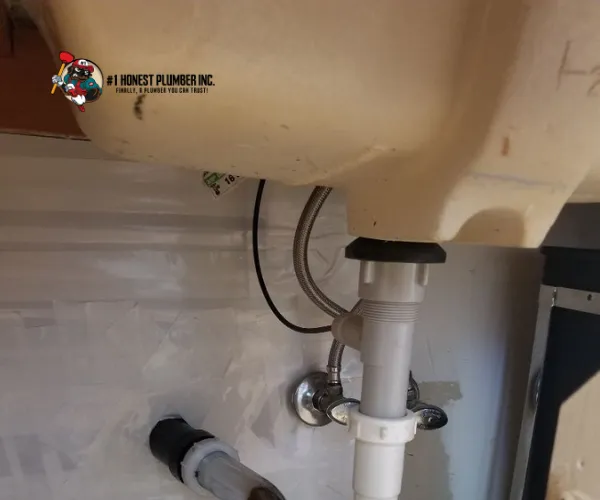
Moisture Vulnerability: A Comparison
| Feature | Drop-In (Top Mount) | Undermount |
| Edge Protection | High (Rim covers the cut) | Low (Counter edge is exposed) |
| Cleaning Logic | Catch at the rim | Direct wipe-in |
| Best Substrate | Laminate, Wood, Stone | Quartz, Granite, Marble |
| Structural Seal | Compression-based | Adhesive & Clip-based |
Applying “The #1 Honest Plumber” Proprietary Methodology
To ensure your kitchen remains dry and functional, we apply our Integrity-First framework. This system eliminates third-party markups by utilizing an All-In-House Infrastructure model. When you hire us for a Sunnyvale installation, you aren’t getting a subcontractor; you are getting our trained employees who understand the intersection of plumbing and structural integrity.
Our process begins with Honest-Tech Diagnostics. We use video fiber optics to inspect the sub-cabinet area and the underside of your countertops before removal begins. This allows us to identify root-cause issues, like micro-fractures in your stone or hidden rot in the subfloor, that a standard plumber might miss. By pairing these diagnostics with our Fixed-Value Logistics, we ensure your quote is comprehensive. We do not “upsell” you on sealants or clips halfway through the job. Because our infrastructure includes in-house expertise in plumbing, concrete, and roofing-grade sealants, we deliver a permanent, code-compliant restoration with minimal property disruption.
Debunking the “Universal Fit” Myth
A common industry misconception is that any sink can be “converted” to an undermount to achieve a modern look. Many drop-in sinks have unfinished, rounded, or inconsistent flanges that are never meant to be hidden. Attempting to undermount a sink designed for top-mounting creates “voids” in the silicone bead. These voids trap moisture and organic debris, leading to a persistent “musty” smell and eventually causing the adhesive bond to fail. If you are considering an upgrade, always ensure the basin is specifically engineered for its intended mounting style.
4 Steps to Ensuring a Watertight Sink Installation
- Surface Decontamination: We use denatured alcohol to strip all oils and old residues from the mounting surface. Silicone will not bond to a surface that has even a trace of old plumber’s putty.
- Star-Pattern Tensioning: Just like tightening the lug nuts on a tire, sink clips must be tightened in a specific sequence. This prevents the sink from tilting, which would create a gap on one side.
- Positive Reveal Calibration: For undermount sinks, we recommend a “positive reveal,” where a small portion of the sink flange is visible. This creates a larger surface area for the silicone seal and is much easier to keep clean than a “zero reveal” or “overhang” style.
- Cure Time Discipline: We enforce a strict 24-hour “no-use” period. Attaching a heavy, vibrating garbage disposal to a fresh installation before the silicone has cured is the leading cause of premature seal failure.
People Also Ask (FAQ)
- Can I replace an undermount sink without removing my countertops?
Yes, but it requires specialized bracing equipment. Our team can often replace the basin from beneath the cabinet, provided the new sink matches the existing cutout dimensions exactly. - How often should I recaulk the seal on my sink?
In high-use kitchens, we recommend inspecting the seal every 12 to 18 months. If you see black spots (mold) or peeling edges, it’s time for a professional refresh to prevent water from reaching your cabinetry. - Is silicone better than plumber’s putty?
For modern sink installations, 100% silicone is the industry standard for waterproofing. Plumber’s putty can dry out and crack over time, and it can actually stain certain types of natural stone like marble.
Trust Your Home to a Neighbor
At the #1 Honest Plumber, we understand that a leaking sink is more than an inconvenience; it’s a threat to your home’s value. Our brand is built on being a trustworthy, straightforward, and dependable partner for homeowners across the South Bay. Whether it’s a midnight emergency or a planned upgrade in Birdland Neighbors, we show up with a calm, professional approach and honest communication. As a local, owner-led company, Ed personally oversees the quality of our work, ensuring that every project meets our rigorous standards for integrity and transparency.
Ready for a permanent solution? Book your service appointment or request a free estimate today at https://1honestplumber.com/sink-installation-repair/. For 24/7 emergency support, give us a call. We’re here to help you and your neighbors keep your homes running smoothly.